What an Application Development Company Actually Does (and How to Buy From One)
Most people buy software once or twice in their career, against a supplier who does it every week. That asymmetry, not price, is where projects go wrong. This is what an application development company actually does, how the commercial models differ, and the handful of contract terms that decide whether you end up with an asset or a hostage situation. If you are still deciding what to build rather than who should build it, start with technology consulting instead.
The short answer
- You're buying six things, not code: discovery, design, build, testing, deployment and support. A quote that only prices "development" is missing most of the work.
- Fixed price suits a clear, bounded scope. Time and materials suits evolving work with a trusted partner. Dedicated team suits continuous roadmaps. Match the model to the certainty you actually have.
- The five clauses that matter: IP ownership, source-code delivery, acceptance criteria, a warranty period, and exit terms.
- Payment should follow working software you can open, not calendar dates.
- The best signal of a good partner is whether they try to reduce your scope during the sales conversation.
What you're actually paying for
Writing code is somewhere between a third and a half of the work. A real engagement covers six stages, and if a quote doesn't name them, you'll pay for the missing ones later as "out of scope":
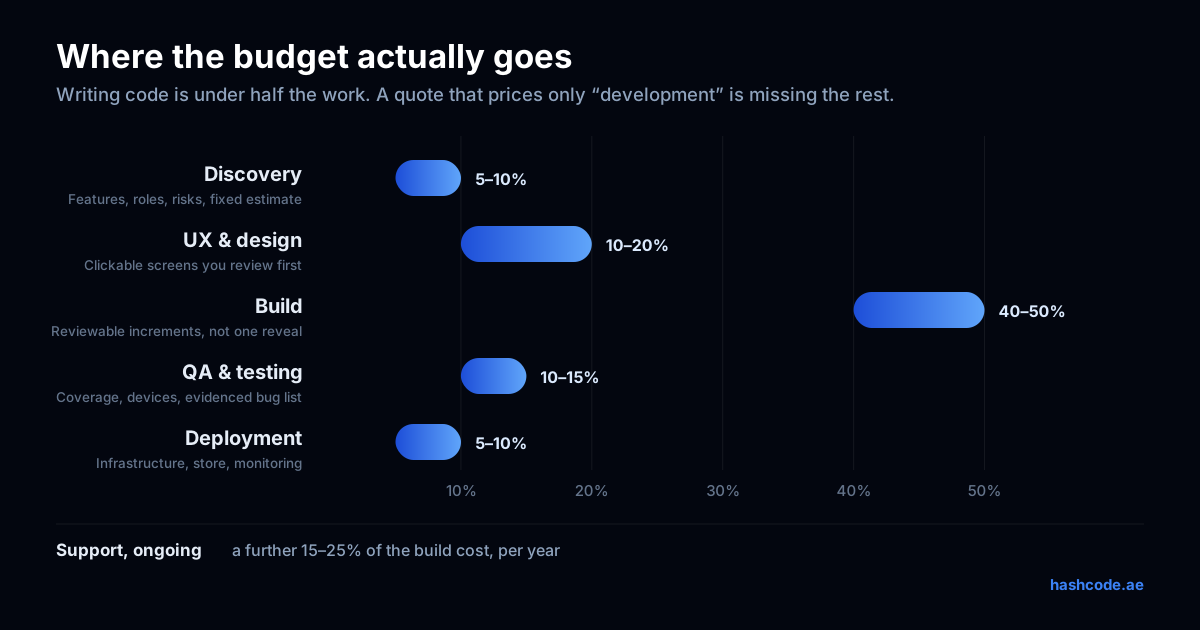
| Stage | What should come out of it | Roughly |
|---|---|---|
| Discovery | A scoped feature list, user roles, integration list, risks and a fixed estimate | 5 to 10% of budget |
| UX & design | Clickable screens you can review before anything is built | 10 to 20% |
| Build | Working software, delivered in reviewable increments, not one reveal at the end | 40 to 50% |
| QA & testing | Test coverage, device testing, a bug list and evidence it was worked through | 10 to 15% |
| Deployment | Live infrastructure, store submissions, monitoring, backups, handover docs | 5 to 10% |
| Support | A named response window, bug fixes, platform updates, small changes | 15 to 25% of build, per year |
The three engagement models
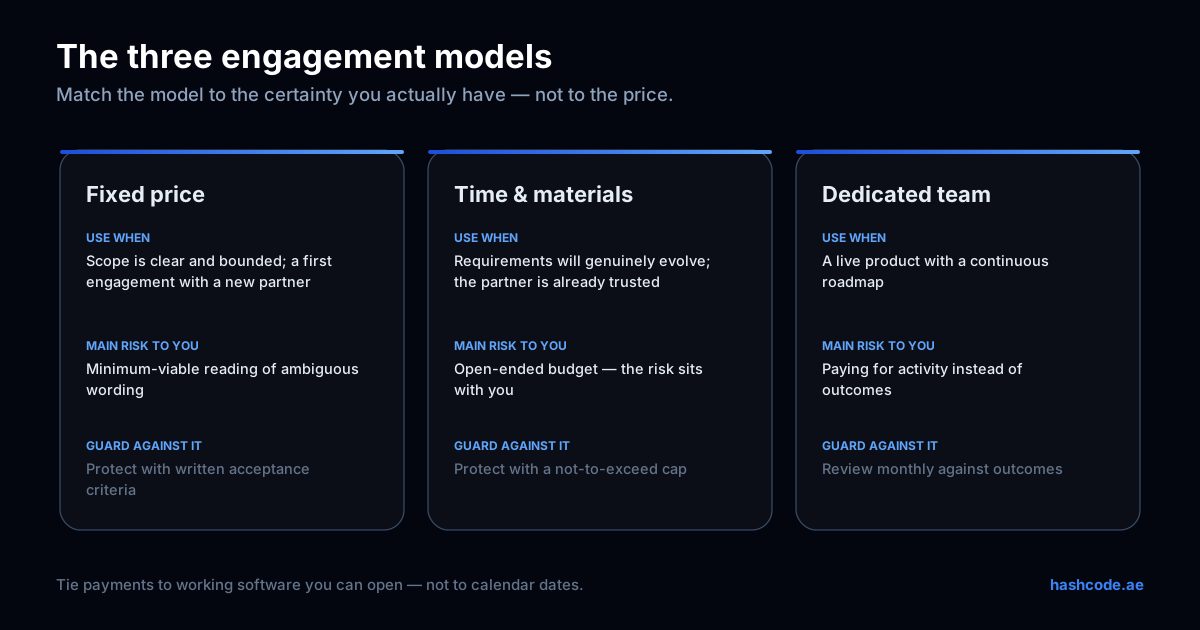
Fixed price
One scope, one number. Right when the requirements are genuinely clear, a defined app, a known integration, a first version. The trade-off is rigidity: the supplier prices in risk, and every change is a change request. The failure mode is a supplier who under-quotes to win, then delivers the minimum the words allow. Protect against it with written acceptance criteria, not by squeezing the price.
Time and materials
You pay for effort as it's spent. Right when the work will genuinely evolve, and honest for both sides, but it transfers all budget risk to you, so it only works with a partner you already trust. Never start a first engagement this way. If you do use it, insist on a not-to-exceed cap, a fortnightly demo, and a burn report you can read.
Dedicated team
A monthly fee for a named team working continuously on your roadmap. Right once you have a live product that keeps changing. It's cheaper and far more flexible than employing the same people, no visas, gratuity, recruitment or idle months, a comparison we ran properly in the cost of hiring developers in Dubai. The risk is drift: a team with no roadmap will happily stay busy. Review output monthly against outcomes, not activity.
| Model | Use when | Main risk to you |
|---|---|---|
| Fixed price | Scope is clear and bounded; first engagement with a new partner | Minimum-viable interpretation of ambiguous wording |
| Time & materials | Requirements will evolve; partner already trusted | Open-ended budget |
| Dedicated team | Live product with a continuous roadmap | Paying for activity instead of outcomes |
The five contract terms that actually protect you
- 1IP ownership, unconditional. All source code, designs and assets are yours on payment. Watch for clauses reserving "pre-existing frameworks" or "proprietary components". That's a licence, not ownership, and it surfaces the day you try to leave.
- 2Source code in your repository from day one. Not zipped up at the end. Your GitHub organisation, your cloud accounts, your app store accounts, your domain. If a supplier resists this, that resistance is the whole answer.
- 3Written acceptance criteria. For each milestone, what specifically must work for it to be accepted. This single page prevents most disputes, because "done" stops being a matter of opinion.
- 4A warranty period. 30 to 90 days after launch where defects against the agreed scope are fixed free. Anyone confident in their testing will agree to this.
- 5Exit terms. What handover includes, documentation, credentials, a walkthrough, and what happens to your data. Agree it while everyone is friendly.
Tie payments to working software you can open on your own device. Milestones tied to dates reward being busy; milestones tied to software reward being finished.
How to spot a good one in the first meeting
- They try to make your project smaller. A partner who suggests cutting version one to what actually matters is optimising for your outcome, not their invoice.
- They ask about your business before your features. Who uses it, what happens today, what breaking looks like.
- They show live products, not portfolio images: URLs and store listings you can open now.
- They give you a straight answer on what's excluded. Long, specific exclusion lists are a good sign, not a bad one.
- The technical lead is in the room. If you only ever meet sales, you'll only ever get sales.
- They tell you something you didn't want to hear. Every good build involves at least one "that's a bad idea, here's why".
Red flags
- A quote before any real questions. That's a template.
- "Yes" to everything, including timelines that should worry them.
- Large upfront payment with no milestone tied to working software.
- No named contact who can make technical decisions.
- Reluctance to put IP ownership in writing.
- A price dramatically below every other quote. Scope gaps don't disappear; they become change requests.
How we engage
We work fixed-scope and fixed-price for first projects, because it's the fairest way for someone who hasn't worked with us before, you know the number before you commit, and the risk of getting the estimate wrong is ours. Discovery, design, build, QA, deployment and store submission are in the price. The code sits in your repository from week one, the accounts are yours, and there's a warranty period after launch. Once a product is live and the roadmap is continuous, clients usually move to a monthly team arrangement. We build software, AI and automation, and we run what we ship, see the case studies, or our guide on comparing development companies in Dubai if you're still building a shortlist.
Get a scope, a price and an exclusions list
Tell us what you need built. You'll get a fixed scope, a fixed price and an explicit list of what isn't included, within one business day.
Start the conversationFrequently asked questions
What does an application development company do?
Six things, not one: discovery (turning your idea into a scoped, estimated plan), UX and design, building the software, testing it, deploying it to live infrastructure and the app stores, and supporting it afterwards. Writing code is only a third to a half of the effort. Any quote that prices development alone is leaving out work you will pay for later.
Fixed price or time and materials, which is better?
Fixed price for a clear, bounded scope, and always for a first engagement with a new partner: you know the number and the estimating risk sits with them. Time and materials only with a partner you already trust and with a not-to-exceed cap. A dedicated monthly team is best once you have a live product and a continuous roadmap.
What should be in a software development contract?
Five things above all: unconditional IP ownership transferring to you on payment; source code in your own repository and accounts from day one; written acceptance criteria per milestone; a warranty period of 30 to 90 days after launch; and exit terms covering handover, documentation, credentials and your data. Payments should be tied to working software rather than calendar dates.
How do I know if a development company is any good?
The strongest signal is whether they try to reduce your scope. Good partners ask about your business before your feature list, show live products you can open rather than portfolio images, give specific answers about what's excluded, put a technical lead in the room, and tell you at least one thing you didn't want to hear.
How much should I pay upfront for app development?
A deposit of 20 to 30% is normal; anything much higher, without milestones tied to software you can actually open and use, is a risk. Structure the rest against working deliverables, a reviewable design, a testable build, a live deployment, so payment tracks progress rather than the passage of time.
What happens after the app is launched?
The work continues, and it should be quoted, not implied. Budget 15 to 25% of the build cost per year for maintenance: bug fixes, operating-system and platform updates (Apple and Google both enforce annual requirements), security patches, and small changes. Agree who runs production, hosting, backups, monitoring, incident response, before launch, not after the first outage.
- Software Development
- Buyer's Guide
- Mobile Apps
- Contracts
Keep reading
Software
Mobile Application Development Services: What's Actually Included
Software
App Development Cost in Dubai (2026): What a Mobile App Really Costs
Software
Shopify Custom Development in Dubai: Costs and When You Need It
Software
Technology Consulting: What It Is, When You Need It, What It Should Cost
Have a project in mind?
We build AI, automation, and software, and run it in production. Tell us what you're trying to do.
Start your project